


Ask ten business owners what they get from their social media agency, and most will describe the same thing: a content calendar, a few posts a week and a monthly report full of likes. That is the visible part of the job. The parts that protect a brand and grow revenue are quieter, and many Sydney businesses have never been told about them.
If you are comparing a social media company Sydney owners can rely on, it helps to know what sits beneath the posting schedule. This guide covers the less talked-about side of social media work. We look at how people now search on social platforms, what social listening reveals, why some of your best traffic never appears in reports, how community management changes in a multicultural area like Blacktown, and why an audit can save you from costly mistakes.
Whether you run a café in the CBD, a trades business in Western Sydney or a clinic in Parramatta, these ideas apply to you. Zenerom is a digital marketing company Sydney businesses can talk to about this kind of work, and the points below will help you judge any provider fairly.
Social Media Has Quietly Become a Search Engine
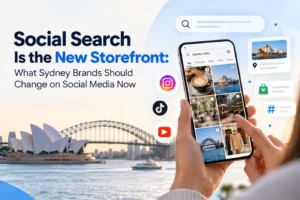
Many people, especially younger audiences, now open Instagram or TikTok to look for a place to eat, a tradesperson or a product review before they ever visit Google. Platforms have responded by improving keyword search, place tags and search suggestions. Your content is no longer only shown to followers. It can be found by strangers who are actively looking for what you sell.
What This Changes for a Sydney Business
The platform reads your captions, on-screen text, spoken words, hashtags, alt text and location tags to decide what to show for a search. A caption like “Big weekend!” tells the platform nothing. A caption like “Saturday brunch specials at our Blacktown café” gives it something to match.
Simple Habits That Help Social Search
- Put your service and suburb in your profile name or bio, not just your brand name.
- Say the important keywords out loud in videos, since spoken words can be picked up.
- Add text on screen that states what the video is about.
- Use location tags on every post that relates to a physical place.
- Save answers to common questions as highlights, so newcomers find them quickly.
None of this needs a bigger budget. It needs someone who treats every post as something that can be discovered, not just scheduled.
Social Listening: Hearing Conversations You Were Never Tagged In
Monitoring is usually described as “tracking your mentions”, but the more valuable version is broader. Social listening means watching for conversations that involve your category even when nobody mentions your brand.
Imagine a Sydney furniture retailer that notices customers repeatedly asking in local community groups whether delivery reaches outer Western Sydney suburbs. That is not a complaint about the retailer. It is a gap in the market, and it points to a new page on the website, a new post and possibly a change in the delivery policy.
What to Track
- Your brand name, including common misspellings and abbreviations.
- Your product or service names.
- Competitor names and the complaints or praise attached to them.
- Suburb plus category phrases, such as “best physio in Blacktown”.
- Questions that keep coming up in comments and group posts.
What to Do With What You Hear
Good listening feeds other parts of the business. Repeated questions become content. Repeated complaints go to whoever runs operations. A sudden change in sentiment gives you an early warning before a small issue becomes a public one. If your reports only show your own numbers, you are missing half of the picture.
Dark Social: The Traffic Your Reports Cannot See
A large share of social sharing happens privately. People send a link to a friend on WhatsApp, drop a post into a family group chat or copy a URL into an email. When those visitors reach your website, analytics tools often label them as “direct” traffic, so the credit never goes to social media. This is commonly called dark social.
For local businesses it matters even more, because recommendations travel through school groups, community pages and family chats. A post can drive real enquiries without a single visible share.
How to Make Dark Social Visible
- Add tracking parameters to every link you post in bios, stories and ads.
- Use platform-specific promo codes or QR codes on printed material.
- Add a “How did you hear about us?” field to enquiry forms and train staff to ask on the phone.
- Create content that is worth forwarding, such as a clear checklist, a local guide or a useful comparison.
When a customer says “my sister sent me your post”, that is dark social at work, and it deserves to be counted.
Community Management in a Multicultural City
Community management is often reduced to replying to comments. In practice it is a reputation job, and it changes with the audience. Blacktown and the wider Western Sydney region are home to communities with many languages, festivals and communication styles. A reply that feels friendly to one group may feel abrupt to another.
Strong social media Blacktown businesses can run has a few features in common.
Respect for Local Rhythm
Acknowledge cultural and community events that matter to your customers, and do it with care rather than as a marketing gimmick. Where you can, respond to comments in the language they were written in, or offer to continue in a private message with someone who can help.
Clear Response Standards
Decide in advance how fast you will reply and who covers evenings and weekends. Customers judge a brand by how it handles a question at 8pm on a Sunday, not just by its polished posts.
A Moderation Policy
Write down what you will hide, what you will delete and what you will escalate. Spam and abuse should be removed. Genuine complaints should be answered publicly with empathy and then moved to a private message. Deleting honest criticism usually makes things worse.
The Social Media Audit Most Brands Skip
Audits are usually presented as a way to improve engagement, but their real value is risk control. A proper audit looks at areas that rarely appear in a monthly report.
- Account security: Who has admin access? Are former staff or old agencies still on the list? Is two-factor authentication switched on?
- Consistency: Do your opening hours, phone number and address match your website and Google Business Profile?
- Advertising claims: Are your offers and testimonials accurate under the Australian Consumer Law? Are paid partnerships and gifted products clearly disclosed, in line with Australian advertising standards?
- Content rights: Do you have permission to use the music, images and customer photos in your posts?
- Audience assumptions: Australia’s rules on social media use by younger teenagers have changed who some brands can realistically reach, so your audience data deserves a fresh look.
- Dormant assets: Old duplicate pages and abandoned accounts can confuse customers and search results.
An audit every six to twelve months is a practical rhythm for most small and mid-sized businesses.
Reporting That a Business Owner Can Act On
Likes are easy to count and easy to celebrate, but they rarely explain why revenue moved. Metrics that connect more closely to decisions include:
- Saves and shares, which usually signal that the content was useful.
- Profile visits and link clicks, which show intent.
- Enquiries by source, which link social activity to real conversations.
- Response time, which shows how well customers are being served.
- Sentiment and share of conversation, which show how you compare with competitors.
A good monthly report should end with three clear decisions: what to do more of, what to stop and what to test next. If it ends with a screenshot of follower growth, ask for more.
How to Choose a Social Media Company in Sydney
A few questions reveal a lot about a provider:
- Who owns the accounts and the ad accounts if we part ways?
- How do you handle a negative comment outside business hours?
- Will you report on enquiries and cost per enquiry, not only reach?
- How will you adapt content for our suburb and our customers?
- What will you stop doing if it is not working?
You can compare answers against the social media services Zenerom offers and see whether a provider goes beyond scheduling posts.
Conclusion
The best social media work is rarely the loudest. It makes your content easier to find, listens to conversations you were never tagged in, counts the shares your analytics cannot see, treats your community with respect and checks the risks in the background. If you are choosing a social media company Sydney businesses can trust, look past the posting calendar and ask how it handles these quieter tasks. For social media Blacktown residents and businesses will actually respond to, local understanding matters as much as creative ideas. Use the questions above at your next meeting and you will quickly see which provider is thinking about your growth and which is only thinking about the next post.