


Ask a Sydney business owner how their social media is going and you will usually hear a follower number. Ask a customer in Blacktown how they found a café, a tutor or a tradie, and you will hear something different: “I searched for it on Instagram,” or “I saw it on TikTok and looked up the reviews.”
That gap between what businesses measure and how customers behave is where most social media budgets leak. This article covers four shifts that a capable social media company in Sydney should already be working on, none of which are about posting more often.
Social Platforms Have Become Search Engines
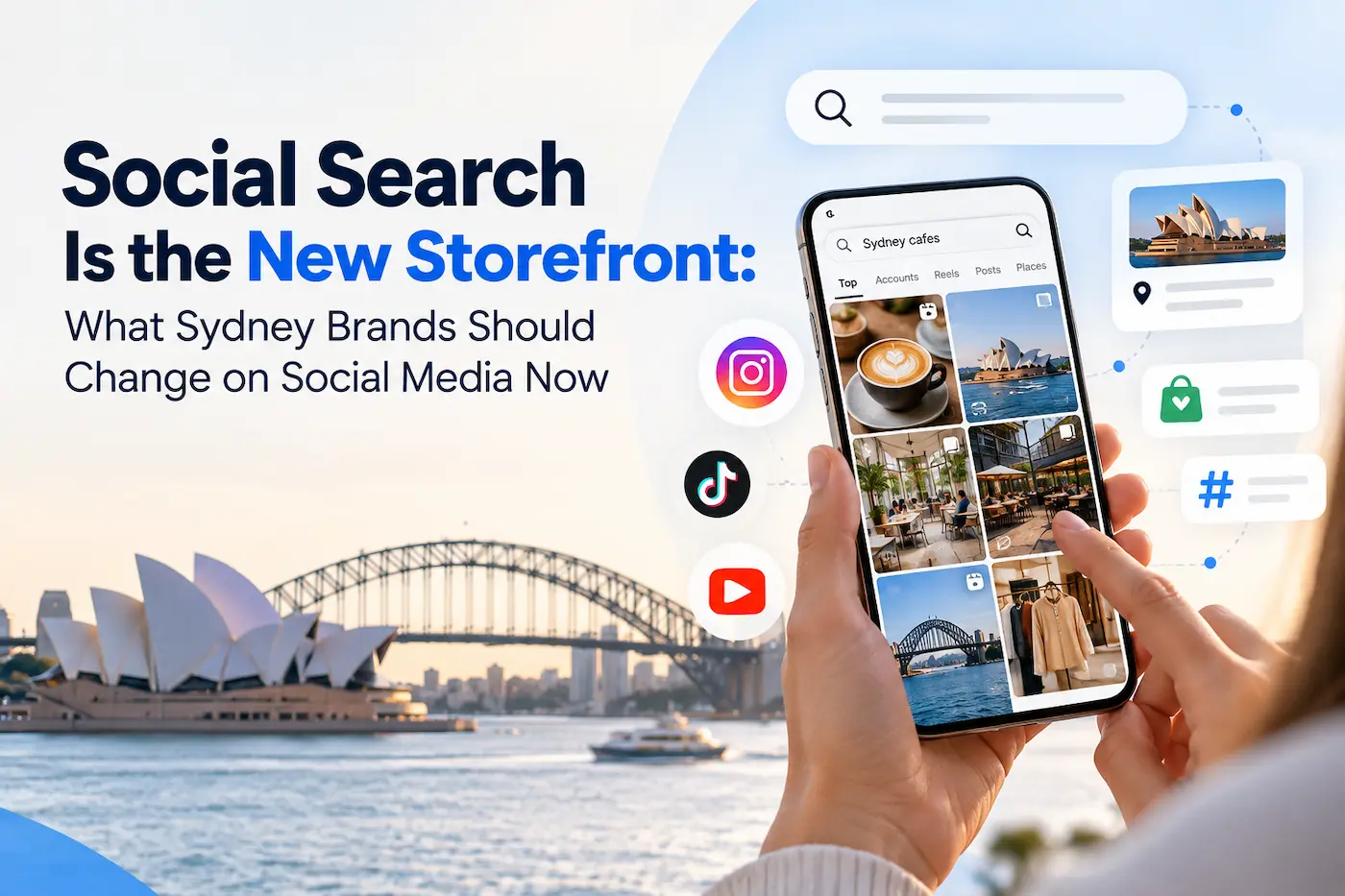
Younger Australians in particular now type questions straight into TikTok, Instagram and YouTube: “best brunch Parramatta”, “cheap driving lessons Blacktown”, “how to fix a leaking tap”. The platforms answer with videos, not links.
Public Instagram content is also now eligible to appear in Google results, which means a well-written caption can work in two places at once.
How to Make a Post Findable
Search on social runs on text, even when the content is video. The platform reads:
- Captions and hashtags, written in the words customers actually use
- On-screen text, which platforms can read and index
- Spoken audio, which is transcribed automatically, so say the service and suburb out loud
- Alt text and location tags, which are often left blank
- Profile names and bios, where a plain description beats a clever slogan
A plumber who posts “Blocked drain fixed in Blacktown, same-day service” with the suburb tagged and spoken in the video will outperform a beautifully shot clip with the caption “Another happy customer”.
The Under-16 Rule and What It Means for Brand Audiences
Australia’s minimum age law for social media took effect in December 2025. Platforms designated as age-restricted must take reasonable steps to stop under-16s holding accounts, and penalties for serious failures reach into the tens of millions of dollars.
For most businesses the law changes audience assumptions rather than daily operations. Consider these practical effects:
- Teen-facing brands such as sportswear, tutoring, gaming and youth events can no longer treat organic social as a direct line to under-16s
- Parents become the buyer, so messaging should speak to the adult who pays, drives and signs the form
- Owned channels gain value: email lists, SMS, websites and school or club partnerships do not depend on platform age rules
- Reporting needs a fresh baseline, because demographic splits inside your analytics may shift
If your Blacktown business relies on families, this is worth reviewing now instead of waiting for a dip in enquiries. The rules and the list of covered platforms are administered by the eSafety Commissioner, so check its guidance for current details.
Creator Partnership Ads: Borrowing Trust Without the Guesswork
Most local businesses treat influencers as a gamble: send a free product, hope for a post. A more controlled approach is the partnership ad. The creator publishes content, grants access, and the business runs it as a paid ad from the creator’s own handle. Meta and TikTok both support versions of this.
The benefits are practical:
- The ad carries the creator’s name and audience trust, which usually beats a brand-voiced ad
- You can target the ad beyond the creator’s followers
- You can pause, refresh or scale the ad on data, not on the creator’s posting schedule
Choosing Creators in Western Sydney
Bigger is not better here. A creator with a few thousand engaged followers in Blacktown, Seven Hills or Rooty Hill often influences local buying more than a Sydney-wide personality. Western Sydney is also one of the most linguistically diverse parts of the country. Creators who speak Punjabi, Arabic, Filipino, Hindi or Vietnamese can reach households that English-only campaigns miss.
Two housekeeping points protect you. Get usage rights in writing, including how long you can run the content as an ad. And make sure paid relationships are clearly disclosed, in line with advertising standards and ACCC guidance on undisclosed endorsements.
Measuring the Traffic You Can’t See
A large share of social influence happens where analytics cannot follow: a reel forwarded in a family group chat, a screenshot sent on WhatsApp, a recommendation in a suburb Facebook group. Marketers call this dark social. It shows up as “direct” traffic, or as nothing at all.
You can still capture it:
- Add a “How did you hear about us?” field to every enquiry form and train staff to ask on calls
- Track saves and shares as primary signals, since they show intent better than likes
- Use UTM parameters on every link in bios, stories and paid posts
- Compare weekly enquiry volume against posting activity, not only against click-throughs
A business that only counts clicks will conclude social media isn’t working. A business that asks customers directly often finds it is working better than the dashboard says.
A Practical Social Media Blacktown Playbook
Blacktown is a suburb where recommendations travel fast, so local relevance pays. A working social media Blacktown approach might include:
- Community Facebook groups: answer questions helpfully before any promotion, and follow each group’s rules
- Location-specific content: filming at recognisable local spots, sponsoring local sport, and covering community events
- Multilingual posts where your customer base justifies it
- Local proof: short customer clips and Google reviews reshared as stories
- Tight geographic ad targeting: a radius around your shopfront or service area, not all of Sydney
Consistency across profiles matters too. Your name, hours, phone number and service area should match on Instagram, Facebook and your Google Business Profile.
Your Inbox Is a Sales Channel
Many Sydney customers now skip the contact form entirely. They send a direct message, comment “price?” under a post, or tap the WhatsApp button on a profile. Speed decides who wins that enquiry, and most small businesses answer hours too late.
A few habits close the gap:
- Set response targets: aim to reply within an hour during opening times, and say your hours clearly in your bio
- Prepare saved replies for the questions you get every week, such as pricing ranges, service areas and booking steps, then personalise each one before sending
- Use a business messaging account so enquiries from Instagram, Facebook and WhatsApp land in one place with quick-reply tools
- Move comments into conversations: a public “sent you the details” reply followed by a private message keeps prices and personal details out of the comment thread
- Tag every enquiry by source, so you can see which posts and ads actually produce conversations
There is also a trust effect. Prospects read comment sections and check whether a business replies. A visible, polite answer to a complaint often does more for a Blacktown shopfront than another polished post.
Questions to Ask a Social Media Company Before You Sign
Whichever agency you choose, these questions separate strategy from busywork:
- How will you make our content searchable, not only shareable?
- What happens to our audience plan under the under-16 rules?
- Who owns the creative and the ad accounts if we leave?
- Which business metrics (calls, bookings, quote requests) will you report, apart from reach?
- How will you capture enquiries that come from private shares?
A partner that can answer these clearly is planning around how customers behave. One that answers with follower targets is planning around how reports look.
If you want a team that ties these tactics to leads, Zenerom’s social media marketing services are a good place to start, and as a full-service digital marketing company Sydney businesses can rely on, the team can connect social with search and advertising.
Conclusion
Social media in Sydney is shifting from a place people scroll to a place people search, and that change affects how you write captions, who you target and what you measure. The under-16 rules push brands toward parents and owned channels. Partnership ads give small businesses a safer way to use creators. Tracking saves, shares and self-reported sources reveals the influence that dashboards hide.
For Blacktown and wider Sydney businesses, the winners will be the ones who treat each post as a searchable asset and each enquiry as a data point. Audit your profiles for searchable wording this week, add a “how did you hear about us” question to your forms, and talk to a social media company Sydney businesses trust about a plan built around results you can count.