



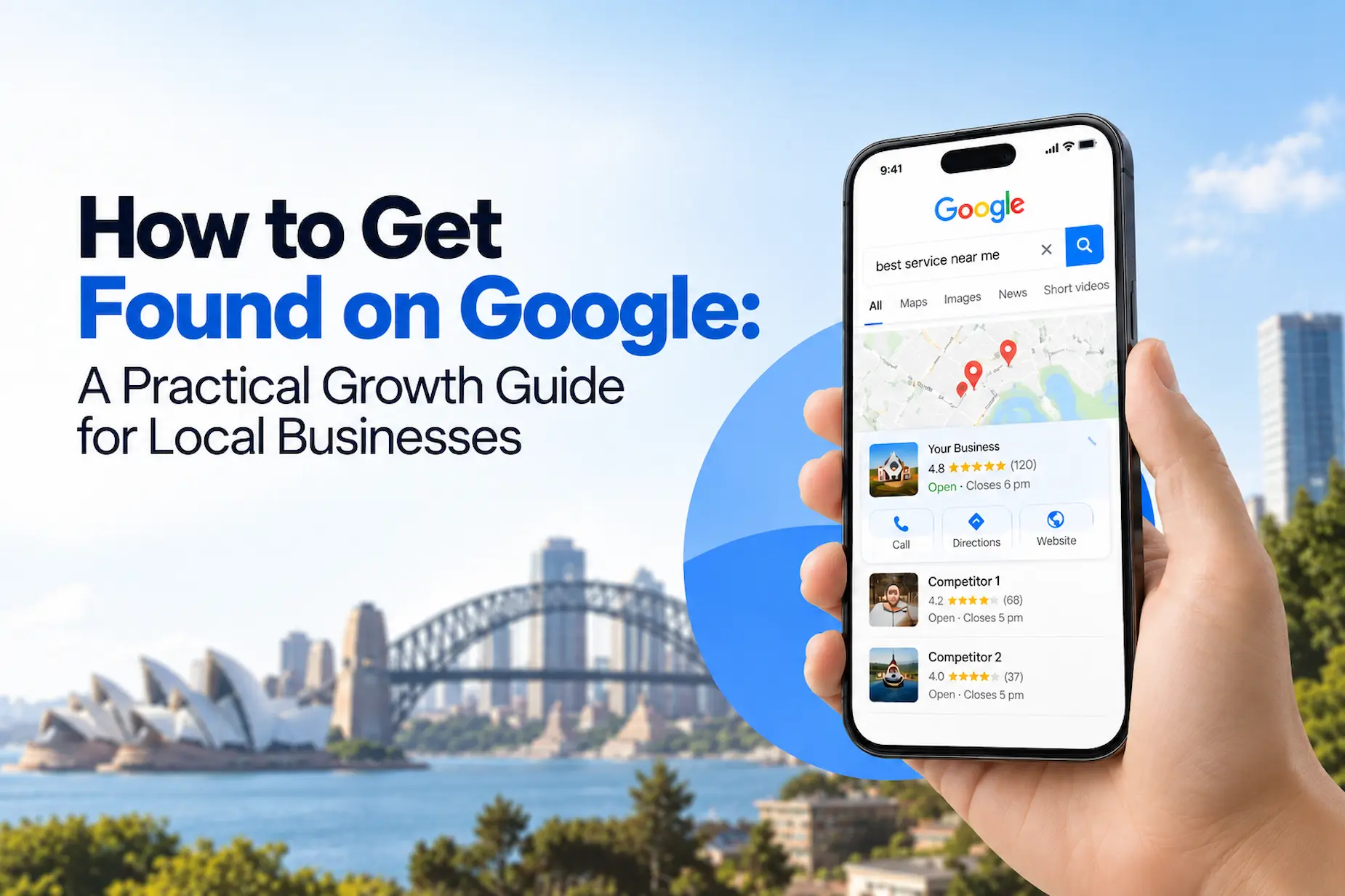
Picture this: a customer in Blacktown pulls out their phone at 7 pm and searches for the service you offer. They don’t scroll through ten links anymore. Google gives them a summary, a map and a handful of local options, and they choose within seconds. If your business isn’t in that short list, you effectively don’t exist to them.
That’s the reality for businesses across Sydney and Blacktown today. Search has changed dramatically, with AI and new search experiences reshaping how people discover businesses. The good news is that businesses that adapt early have a real chance to leapfrog bigger competitors. Here’s what has changed, what Google is rewarding, and what you can do about it.
Search Is No Longer Just Ten Blue Links
For years, SEO meant climbing a list of ten results. Today a Google results page can include an AI-generated overview, a local map pack, video results, “People also ask” boxes and conversational AI Mode answers. Google continues to expand how it reports on how pages appear across AI-powered search experiences.
The practical effect is that ranking first no longer guarantees the click it once did. Industry studies suggest that when an AI Overview appears, click-through rates on the top organic result fall noticeably, and a large share of searches now end without any click at all. That doesn’t make SEO dead. Google itself has said SEO remains the foundation for visibility in AI search. But the goal has widened from “rank high” to “be the source that gets cited, recommended and remembered.”
What Google’s Latest Updates Are Really Rewarding
Google confirmed multiple core updates in 2026, including March and May rollouts. Google’s official line on core updates hasn’t changed much: reward helpful, people-first content and demote the rest. Looking at what shifted in the results, three themes stand out.
Original information beats rewritten information. Pages that simply rephrase what already ranks are losing ground. Pages that add something new, such as first-hand experience, local examples, original data or a genuine point of view, are gaining. This is often called “information gain,” and it’s the reason generic, mass-produced articles struggle.
Real expertise and trust matter. Named authors, verifiable business details, genuine reviews and consistent branding all support what Google calls E-E-A-T (experience, expertise, authoritativeness and trust). Aggregator and directory sites lost visibility in recent updates, while specialist sites and established brands did better.
Manipulation is riskier than ever. In May 2026, Google expanded its spam policy and published new guidance on generative AI search, including treating attempts to manipulate AI responses as spam. Link schemes, fake reviews and thin AI-spun content are all high-risk shortcuts.
Local Search: Why Sydney and Blacktown Need Their Own Playbook
Sydney is one of the most competitive search markets in Australia, but “Sydney” isn’t one audience. Someone searching from Blacktown has different expectations, different competitors and different nearby landmarks than someone in the CBD or on the North Shore. Local intent is strong in Western Sydney, with customers who search “near me” and pick businesses they can reach easily.
To win those searches, focus on these local signals:
- A fully optimised Google Business Profile. Accurate categories, services, opening hours, photos, posts and Q&A. Active profiles tend to outperform neglected ones.
- Consistent name, address and phone details. Your details should match across your website, directories and social profiles.
- Genuine reviews. Ask real customers regularly and reply to every review. Review quality, recency and your responses all count.
- Suburb-relevant content. Create useful pages and posts that reflect the areas you actually serve, such as Blacktown, Parramatta, Penrith and the wider Sydney region, without copying the same text and swapping suburb names.
- Local schema markup. Structured data helps search engines and AI systems understand who you are, where you operate and what you offer.
Technical Foundations Still Decide Who Gets Seen
Great content can’t rank if search engines struggle to access it. Some technical points deserve attention this year:
- Speed and Core Web Vitals. Slow mobile pages lose both rankings and customers.
- Server-side or pre-rendered content. Google has noted that some AI systems struggle with JavaScript-heavy pages, so important content should be available in the HTML.
- Clean site structure. Clear navigation, logical internal links and no orphan pages.
- Mobile-first design. Most local searches happen on phones, often while people are out and about.
- Secure, crawlable pages. Fix broken links, redirect chains and duplicate pages regularly.
Think of technical SEO as the foundation of a house. Nobody admires it, but everything collapses without it.
Writing Content That Earns Citations, Not Just Clicks
AI search tools pull from pages that answer questions clearly. To become a source they trust, structure your content with this in mind:
- Answer the question first, then explain it.
- Use real numbers, examples and case details instead of vague claims.
- Name your sources and show who wrote the content.
- Keep sentences short and headings descriptive.
- Cover the whole topic, including the follow-up questions a customer is likely to ask.
Google has also said that using FAQ markup just to grab extra space in results no longer makes sense, so add FAQ sections only where they genuinely help readers.
Measure What Actually Grows Your Business
Rankings are a means, not the goal. A Blacktown business owner cares about phone calls, quote requests, foot traffic and sales. Track these alongside your search data:
- Organic leads and enquiries, not just traffic
- Google Business Profile actions such as calls, direction requests and website clicks
- Branded search growth, meaning more people searching your business name
- Conversion rate on key pages
- Impressions and visibility in Search Console, including the new AI-related reports
If traffic dips while enquiries hold steady, that’s often the AI-search effect at work. Fewer casual visitors, but the same or better quality of customers.
Choosing the Right Partner for Your Growth
SEO is a long-term investment, and the wrong partner can waste months. When you’re comparing SEO services Sydney providers, look for these signs:
- Clear reporting focused on leads and revenue, not just keyword positions
- No guaranteed rankings. Nobody controls Google’s results
- A local understanding of Sydney suburbs, including Western Sydney communities like Blacktown
- White-hat methods only. Ask directly how they build links and create content
- Joined-up services, because SEO works best alongside quality content, a fast website and strong social and paid campaigns
Businesses that want everything under one roof can work with a team like Zenerom digital marketing, which offers SEO alongside content marketing, web development, social media and PPC from its Blacktown base.
A Quick Local SEO Checklist
- Claim and fully complete your Google Business Profile
- Audit your site speed and mobile experience
- Rewrite thin or duplicate pages with original, helpful information
- Add author details and business credentials to your content
- Build a steady process for collecting genuine reviews
- Add structured data for your business, services and reviews
- Publish new, locally relevant content regularly
- Review your analytics monthly and adjust
Final Thoughts
Search will keep evolving, with AI features, conversational answers and personalised results. But the fundamentals are surprisingly stable: be genuinely useful, be trustworthy, be easy to find and be locally relevant. Businesses across Sydney and Blacktown that invest in those four things will be better placed whatever Google changes next.
Start with one improvement this week, whether that’s your Google Business Profile, your slowest page or your thinnest article. Small, consistent steps compound into rankings, and rankings into customers.